Clothing and materials
What fabric weight T-shirts under print? 150, 180 or 200 g/m²
What's the best printing of the T-shirt? We compare light, standard and thicker T-shirts and their company and event applications.
fabric weight speaks of the weight of the material per square metre, but it does not describe the entire quality of the shirt itself. The weave, the type of cotton, the finish and the cut can be equally important. Nevertheless, the fabric weight helps quickly determine whether you are looking for a light event shirt, universal standard or a heavier premium product.
What options should we consider?
- about 140-160 g/m²: light promotional T-shirts and summer applications
- about 170-190 g/m²: universal range for many company applications
- about 200 g/m² and more: thicker, more massive character of the product
There is no single product perfect for all. It is worth adjusting to the working conditions, season, expected appearance and how often it will be washed.
Selection criteria
- The purpose of clothing
- time of year and working conditions
- expected premium effect
- type of marking
- washing frequency
- Budget of the entire contract
Best decisions arise when these criteria are considered together. The composition of the material or the fabric weight itself is not enough if the product has an inappropriate cut or is difficult to access at later ancestorings.
How do I fit the marking technique?
- DTF works on many grammes, but large graphics can be more noticeable on a thin shirt
- screen printing works well on both light and thicker shirts after proper paint selection
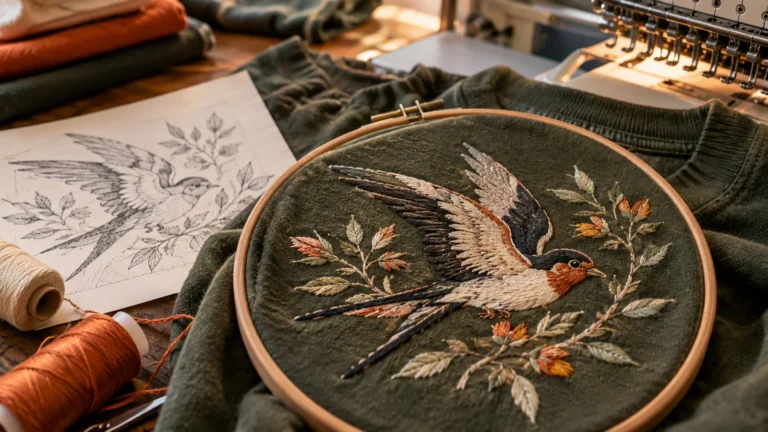
- embroidery on a very thin T-shirt requires caution and usually a small design
- Flex should be tailored to the elasticity of the material
The technique should support the function of the product. In one collection, several methods can be used and still maintain a consistent appearance of the brand.
Most common errors in product selection
- choosing a fabric weight only after a number without checking the quality of the knitted fabric
- Buying a very thick T-shirt to work at high temperature
- assuming that each 190 g/m² shirt is identical
- no sample with a larger order
- skipping the cut and sizing
With a larger order, a sample or fitting often costs much less than a later replacement of the wrongly selected series.
Examples of applications
- for a one-day event, a light economic model is often enough
- For office and service staff, standard fabric weight can be a good choice.
- for clothing brand or premium product it is worth considering heavier T-shirt and better finish
- for physical work you need to combine durability with thermal comfort
Consider these examples as a starting point. The final choice depends on a particular model, design and performance requirements.
How do I translate this information into a real order?
It is best to prepare a short specification: type of product, number of pieces, size, date, place of marking and file. If you do not know the technique, do not guess - a description of the application and expected effect will usually suffice to compare the available possibilities.
With a larger series, it is also worth looking at the possibility of later homes. A coherent clothing model, a saved logo dimension and one accepted source file make it easier to maintain a similar effect in subsequent batches.
What should I prepare before valuation?
- indicative number of pieces and sizes
- information on the type of clothing or its use
- logo or best available graphic file
- place and approximate size of marking
- date for which clothing is to be needed
- information about personalization if each piece is to differ
Such a set of data does not yet mean order, but allows you to prepare a concrete and comparable proposal instead of guessing costs.
THE MOST COMMON QUESTIONS
FAQ
Is a thicker shirt always better?
No. It can be more durable and more massive, but in warm conditions it can be less comfortable.
Does the fabric weight affect printing?
Indirectly so, because it affects the preservation of the material and the feeling of the whole product.
What is the most versatile fabric weight?
Many companies choose the midrange, but the right model depends on the application and budget.
Is a thin T-shirt suitable for DTF?
Yes, subject to reasonable graphic size and correct application parameters.
Is it worth ordering a T-shirt sample?
With a larger order, it is definitely worth checking the material, cut and size before approving the whole series.
DO YOU HAVE A SPECIFIC PROJECT?
You don't have to choose your own technology. Send the data, and we'll figure out a reasonable solution.
READ MORE