Marking techniques
Sublimation on Clothing - when it is worth choosing and on what it works
Clothing sublimation: materials, colours, durability and application. Check when sublimation is better than DTF or screen printing.
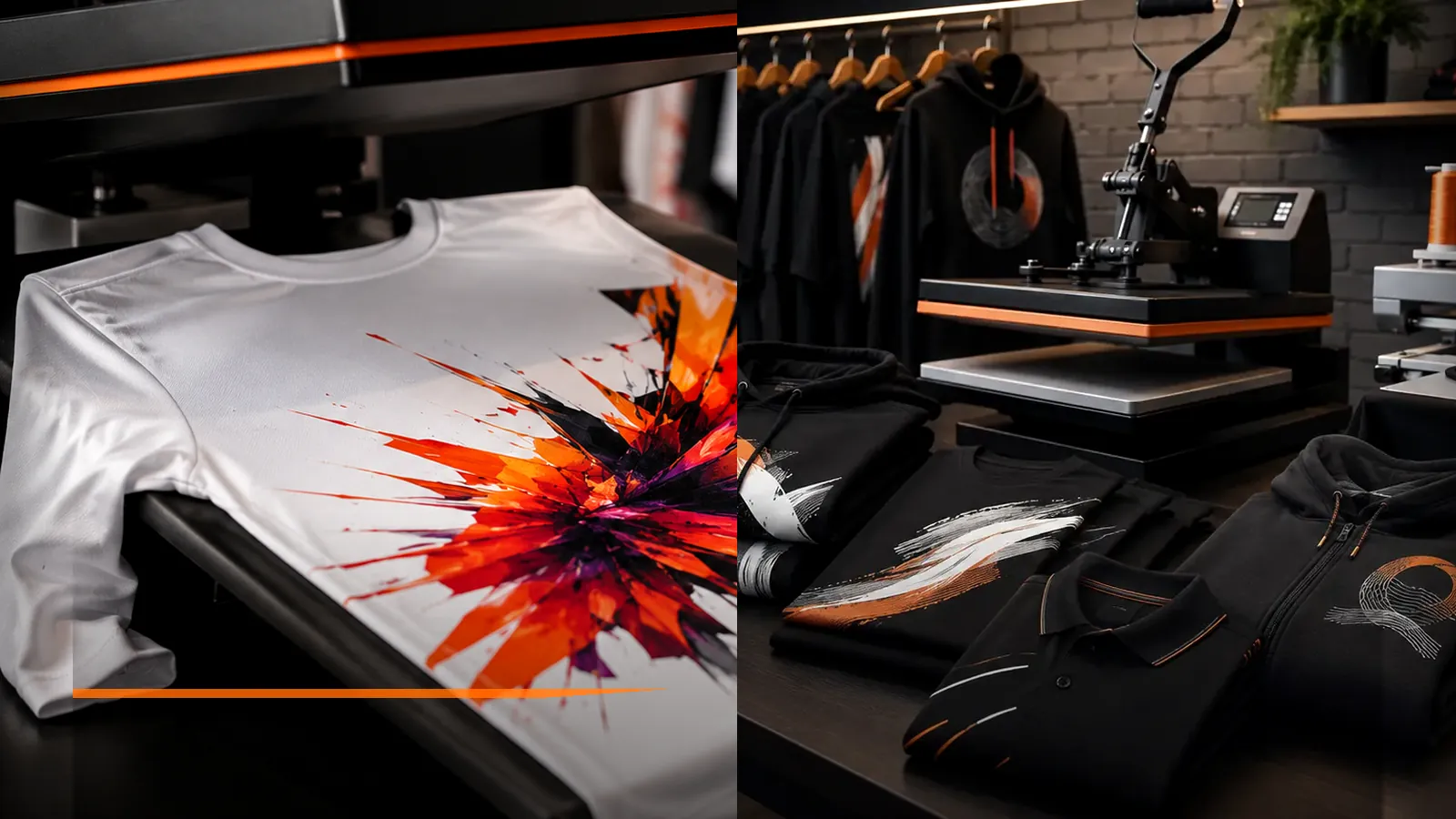
Sublimation is unique because the dye penetrates the structure of the material instead of creating a detectable layer on the surface. Thanks to this printing can be very light and durable, but the technology has specific requirements regarding the material and color of the substrate.
How does sublimation work?
The high temperature causes the sublimation dye to pass into the gas state and bind it to the appropriate polyester surface. The printing becomes part of the material, therefore there is no classic film lying on top.
That's why the end result depends on the whole process, not just the machine used. The file, material and production parameters form one system - a weak element can reduce quality even with good technology.
When does this method make the most sense?
- Bright polyester clothing
- sports shirts
- full-color graphics
- products intended for sublimation
- projects requiring light, unsensible printing
Classic sublimation is not a natural choice for dark cotton. The colour of the fabric affects the final appearance because the technique does not print a typical white covering layer.
Materials and clothing behaviour
The best result is the correct content of polyester and a bright surface. The more natural fibers, the weaker the binding of the sublimation dye.
Before a larger series it is worth to check a specific product. Two fabrics of similar composition may differ in finish, structure and reaction to temperature or stress.
Durability and Care
Because the dye penetrates the structure of the material, the printing does not break like a classic transfer layer. However, the durability of the entire product also depends on the quality of the fabric.
It is safest to use the clothing manufacturer's and the labeling contractor's recommendations. High temperature, aggressive chemistry or incorrect ironing can reduce the life of both printing and the product itself.
What does the cost depend on?
The price depends on the size of the graphics, method of production and product. For full printing of clothing, other processes shall be used than for small sublimation transfer.
The valuation should take into account not only the number of pieces but also the size of the project, the number of seats, the preparation of the file and possible variants. Only then can techniques be compared fairly.
How to prepare the project?
The graphics should be prepared in a high quality and appropriate space of the colour process. With full prints, you have to take into account patterns, margins and places of connection.
It is not worth correcting the file "by force" by artificially increasing resolution. The better solution is to find the source logo or to consciously simplify the project.
The most common errors
- an attempt to obtain cover white on dark material
- bad product without appropriate polyester layer
- not to take account of the colour of the substrate
- wrong color profile
- overheating or underheating of the product
Most of these problems can be detected even before production, therefore visualization, sample or short consultation are particularly important for larger orders.
How to assess quality before a larger order?
With a larger series, it is not worth to evaluate quality only on the basis of the product photo or technology name. The specific clothing model, material quality, file preparation and process repetition are important. If the order is either visually valid or intensively used, a sample, marking test or at least an accurate visualisation on the target product is a good solution.
It is also worth checking whether the contractor can explain the limitations of the chosen method. A reliable recommendation is not a promise that any graphics can be done identically on any material. Sometimes the best decision is to simplify the design, change the marking site or use two different techniques in one set of clothing.
How do you compare offers to compare the same?
Two offers can look similar and apply to completely different products. Before comparison check the manufacturer and model of clothing, weight or composition of material, the actual dimension of marking, the number of places, technique, the range of file preparation and whether the price includes personalization and additional work. Only such a set of data makes it possible to fairly assess the difference in price.
It is also worth asking about the possibility of subsequent homage. The cheapest model that disappears from the offer after a few months may make it difficult to maintain a coherent appearance of the team. With fixed company clothing, availability and repeatability of the product are often just as important as the price of the first order.
When is it worth a test or marking test?
The sample is particularly useful for unusual material, new clothing model, large circulation, complicated graphics or a situation where color and impression of printing are of great importance. It allows you to evaluate not only the character itself, but also its proportions, position and behavior of the entire product after the assumption.
Not every order requires a full production sample. With a simple, proven design, it is often enough to visualize and approve dimensions. The greater the financial or image risk, the more it pays to take time to check the solution first.
What is worth saving for the next home?
After successful implementation, it is worth keeping the name of the manufacturer and model of clothing, color, size, source file logo, technique, exact size and place of marking. Such specification shortens the subsequent order and reduces the risk that the new batch will look different from the previous one.
With companies, schools, clubs and organizations, a simple standard of order works well. One approved table of models and logo places makes it possible to match new people without redesigning everything from the beginning. It is especially important when orders are executed several times a year.
How do I translate this information into a real order?
It is best to prepare a short specification: type of product, number of pieces, size, date, place of marking and file. If you do not know the technique, do not guess - a description of the application and expected effect will usually suffice to compare the available possibilities.
With a larger series, it is also worth looking at the possibility of later homes. A coherent clothing model, a saved logo dimension and one accepted source file make it easier to maintain a similar effect in subsequent batches.
What should I prepare before valuation?
- indicative number of pieces and sizes
- information on the type of clothing or its use
- logo or best available graphic file
- place and approximate size of marking
- date for which clothing is to be needed
- information about personalization if each piece is to differ
Such a set of data does not yet mean order, but allows you to prepare a concrete and comparable proposal instead of guessing costs.
THE MOST COMMON QUESTIONS
FAQ
Is sublimation suitable for a black shirt?
Classic sublimation does not print covering white, so it is best suited for bright polyester surfaces.
Is sublimation printing detectable?
On the appropriate fabric it hardly creates an additional layer on the surface.
Is sublimation permanent?
The dye is associated with the material, so printing has a very good resistance to cracking and abrasion.
Can you sublimate cotton?
Classic sublimation requires polyester or specially prepared surface.
Is it suitable for photos?
Yes, full color and tonal transitions are one of the main advantages of sublimation.
DO YOU HAVE A SPECIFIC PROJECT?
You don't have to choose your own technology. Send the data, and we'll figure out a reasonable solution.
READ MORE