Design and Files
Large oversize T-shirt printing on the back: proportions and composition
Are you planning a big graphic on your oversize shirt? Check the proportions, margins, composition weight and file quality before selecting the print dimension.
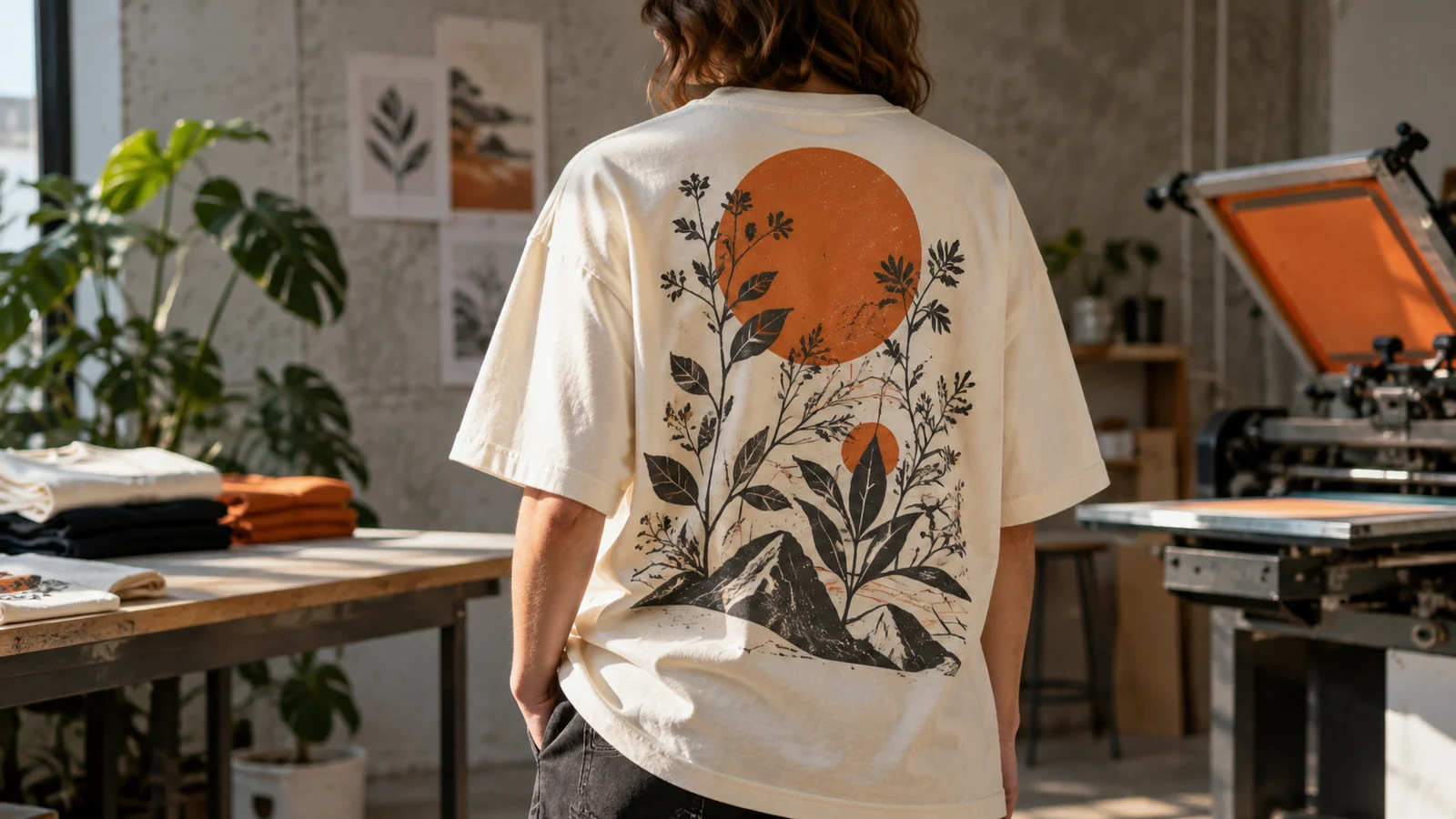
Oversize T-shirt encourages big illustrations on the back, but the biggest possible printing does not always look good. The wide cut needs a thoughtful composition: the right margin, the point of gravity and the relationship between the image and the inscription.
A big project doesn't have to fill your entire back.
Leave space around the motif so it doesn't look like a random match to the technology limits. With a broad illustration, side margins are important. With a vertical poster, the distance from the collar and the lower edge of the clothes is more important.
Rectangular photography can consciously resemble a poster. The picture without the background in turn gives a more open composition. Decide which effect fits the project instead of removing the background or adding the frame only out of habit.
Select one main point of attention
If you have an illustration on your back, a large inscription, a list of dates and the author's signature, set a hierarchy. The recipient should know where to look first. You can base the project on one big theme and a few calmer supporting information.
Check the composition in minor. If all the elements come into an equal spot, they may have a similar weight. Changing intervals or reducing the number of subtitles often helps to increase graphics more than further.
Oversize is a cut, not one universal size
Two shirts described as oversize may have different width, length and line of arms. It is not enough to transfer the printing dimension from the photographs of another product. Check the table and the real model, especially if you order a series of small and large sizes.
The graphics viewed flat can be partially wrapped sideways while wearing. With very wide inscriptions, the extreme letters cease to be visible at the back. Therefore, important information should be kept in the central part of the composition.
Greater print reveals file quality more strongly
When magnifying the image, problems appear, which were not seen in a small miniature: ripped edges, compression marks and inconspicuous letters. A good source is more important than just raising the number of DPIs in the file settings.
If the design consists of illustrations and text, keep the text in good quality regardless of the image. Do not export the entire composition as a small screenshot. You can read about the assessment of photography in a guidebook T-shirts with photo.
Cover the surface covered by the marking
Two prints of the same external dimensions can occupy a different part of the material: one is a light contour, the other is a full rectangle. With large compositions, it is worth discussing the sensation of the surface and matching the technique to the expectations. Don't judge the project just by the width in centimeters.
With the full image you may consider changing the composition, leaving breaks or conscious raster. Each of these decisions should be based on style, not accidental deletion of fragments. More about this article print vintage and raster.
For consultation send the file, T-shirt model and paper preview on the planned scale. Ask for confirmation of the feasible dimension and valuation of clothing and printing separately. The maximum area depends on the product and available technology.
THE MOST COMMON QUESTIONS
FAQ
Do you always need more printing on oversize?
No. A small, consciously placed sign can also work. The intended style and proportions on a specific cut count.
Does one graphic size fit the entire size?
Sometimes yes, but you have to check the smallest product and preserve margins. In some projects it is worth to prepare two rocks.
Can a large rectangular print be changed to an illustration without a background?
This is often possible after the file has been developed. However, we need to check whether the removal of the background does not take the sense of the composition and whether the edges are suitable for production.
YOUR PROJECT
Let's match the big theme to the oversize shirt.
CZYTAJ DALEJ