Individual graphics
T-shirt with photo: how to select frame for print
A shirt with a picture without random shot. Check the focus, proportions and background of the photograph and see how to prepare a file for printing on clothing.
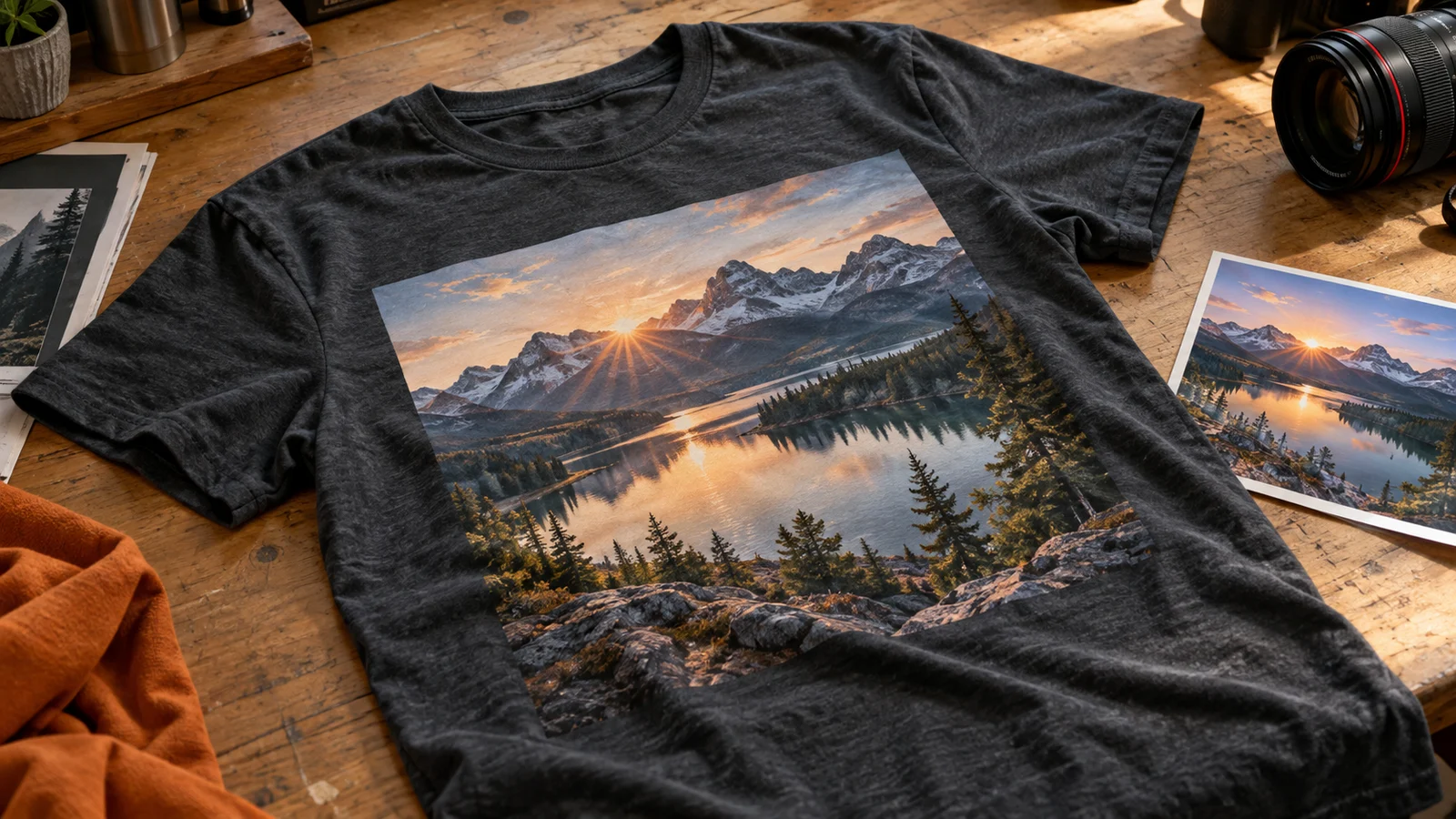
A picture that looks good on your phone doesn't have to look as good on your shirt. On the clothes you can see simultaneously the frame, the color of the material and the way the graphics are arranged on the silhouette. The best effect begins with the choice of photography and only later with the selection of printing techniques.
Choose a photograph with one clear theme
Portrait, holiday view and photo of the whole group require a different composition. The most important thing about the portrait is eyes and mimics. In the landscape it is worth to keep a distinctive point, which will also be recognizable with a few steps. A picture of a dozen people less than a small mark on their breasts will usually turn their faces into tiny spots.
Rate the photograph after trimming, not only in the original proportions. If you need a vertical print and the picture is a wide panoramic frame, do not extend it vertically. Choose a fragment, add a consciously designed margin or change the layout of your T-shirt.
Pixels are the most important thing when it's done.
A 3000 pixel width photograph will not retain this value if you cut a small face out of it. For example, for 25 cm wide print, a picture of about 2953 pixels gives 300 pixels per inch. This is a reference point for the evaluation of the file, not a guarantee of good printout. The vague image will remain vague despite the appropriate number of pixels.
Adobe describes 300 ppi as a typical standard for detailed printouts viewed from close up. In a specific implementation, the result also depends on the material and nature of the image. Keep the file from the camera; the image sent repeatedly by the communicators may have a worse quality.
Rectangle, cut-out character or signature composition?
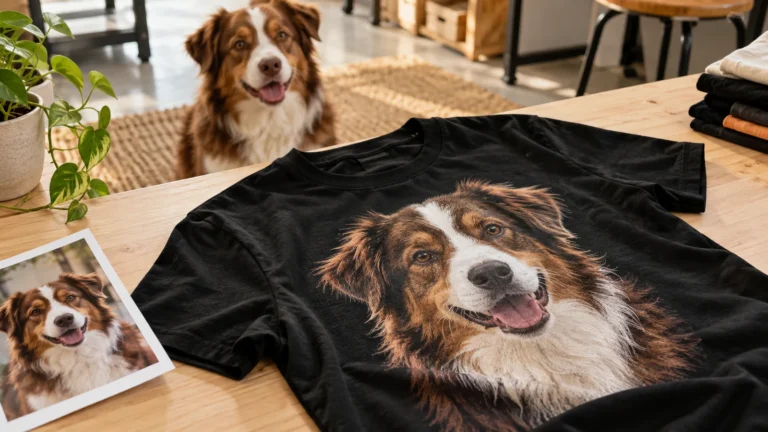
The rectangle is a good solution if the background tells a story: shows the place of the expedition, the stage of the concert or an important event. You don't have to remove it just because the print goes on your clothes. In turn a portrait of an animal or a single figure may look natural without an accidental wall in the background.
The third option is the designed composition: photo, short signature and a small date. Set a hierarchy. If photography is the most important, don't surround it with a few competing handwriting cuts. When removing the background, look at the hair, glasses and thin stripes, because an automatic tool can cut out the necessary elements as well.
Choose a T-shirt for the brightness of photography
A dark portrait on a black shirt may need a clear edge or a brighter area around your face. A bright picture on a white material may look light, but its limit will become less visible. Compare the project on two backgrounds before the final decision.
Photos are a good starting point for evaluation marking of full-color DTF. With the appropriate clear polyester material, you can also consider sublimation. Do not choose the technique based solely on the number of colors on the screen.
Check the sample view on the actual scale
Print HR on paper in the planned width and put it on your clothes. See him up close and in the mirror. Make sure your face doesn't fall on a natural t-shirt collapse, and your signature isn't too close to the bottom edge of the picture. The paper will not show the printing invoice, but it reveals the problems with proportions well.
Add the original, selected frames to the query and whether you want to keep the background. If the photograph represents several people, indicate which ones must remain in the composition. Do not assume that the person who prepares the file knows the meaning of each fragment of the picture.
THE MOST COMMON QUESTIONS
FAQ
Is the photo on your phone enough?
Often so, if it is sharp, correctly lit and has enough pixels after embedding. It's best to send the original.
Does the photo have to be rectangular?
No. You can prepare a cut-out theme or other composition if the edges of photography allow for aesthetic development.
Does a larger file always mean better quality?
No. The large size of the file does not fix the movement, inintenseness or strong compression stored in the image.
YOUR PROJECT
Show photo and planned frame - we'll choose the printing method.
CZYTAJ DALEJ