Ideas and Collections
Your first T-shirt collection with original artwork: how to plan it
Are you planning your first collection of T-shirts with your own illustrations? Choose consistent motives, limit variants and prepare a specification and sample.
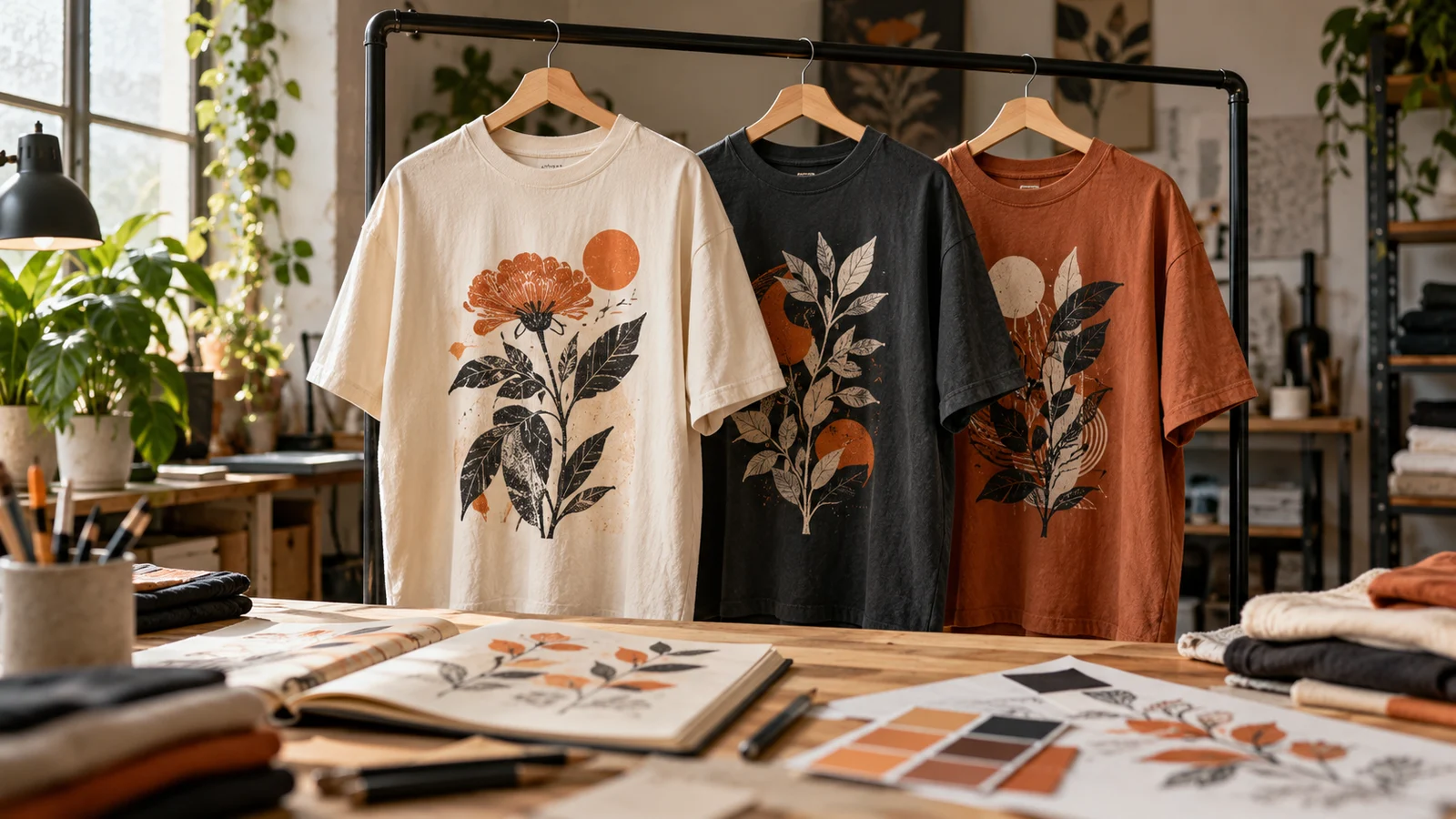
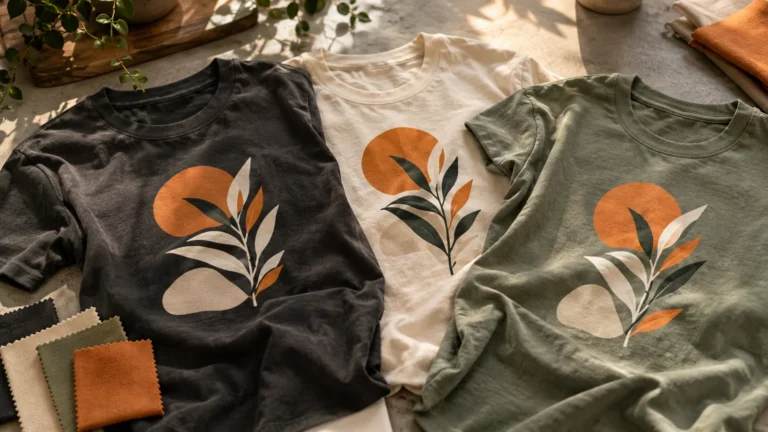
The first collection of T-shirts does not have to contain all your illustrations. It is better to choose some works that combine a clear idea, and to refine their translation into clothes. Coherence is determined not only by motives, but also by the cut, palette and presentation.
Build a collection around one idea
It can be a series of plants, urban sketches, abstract forms or figures. Choose a common visual language: similar line, limited palette or repetitive way to place the signature. Any project can be different, but still belong to the same family.
Prepare a list of all the motives next to you. If one work looks like an element of a completely different collection, put it down for later or develop it in a coherent style. There is no need to add an identical frame to each drawing to achieve a common character.
Choose clothes with illustration
The same theme may look different on a matching T-shirt, wide oversize and hoodie. The cut determines the proportions, and the color determines the contrast. The choice of the product only after completing all the schedule often forces unnecessary corrections.
On start you can limit yourself to one model and a small number of colors. It's easier to compare motives, prepare pictures and describe sizes. If you are planning large prints on the back, check them on the smallest size in the series.
Write down the variants before you count the effort.
Each combination of motive, color and size means a separate product variant. Three graphics already, two colors and five sizes make up thirty combinations. This is an organizational example, not a recommended size of the first collection.
Prepare a table with design name, variant code, clothing model, color, size, place and print dimension and number of pieces. This will avoid a situation where total order quantity seems reasonable, but is divided into many individual combinations.
The sample will answer specific questions
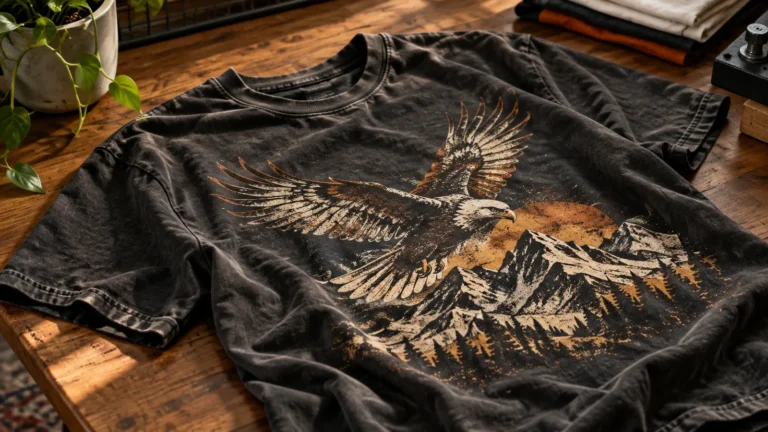
Before ordering a larger batch, determine what you want to check: color, scale of the illustration, position on the figure or the way in which the details are made. Choose a representative project, preferably containing elements requiring evaluation. Ask for the possibility, the deadline and the cost of the trial performance.
Compare the sample with the approved file and specification, not just the image on your phone. Also assess the comfort of clothes and the size of marking. If you make a change, save a new version of the project and remove the confusion that the file is valid in the series.
Arrange costs and presentation materials
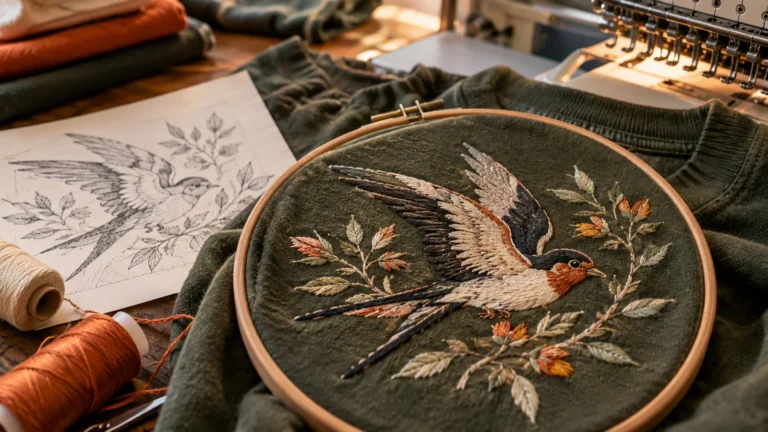
Separate the price of the clothing itself, marking each place, preparation of graphics or embroidery program and sample. If labels, packaging or additional materials are available, take them into account separately. The comparison of options makes sense only in the same range.
Take photos of the actual product and detail print, show the front and back and use the size table of the right model. Visualization may announce the collection, but it should be signed as a project. The names of the variants in the presentation should correspond to the indications in the order list.
Save a set of files and specifications to facilitate subsequent homage. Their conditions and availability of clothing must be confirmed again. If your collection is related to your community, please also read about merch for online creators.
THE MOST COMMON QUESTIONS
FAQ
How many projects do I start my collection?
There's no mandatory number. It is worth to start with a small, coherent set, whose variants you can clearly describe and present.
Does every illustration require a different technique?
No, but projects can have different requirements. A common technique can be conveniently organized if it fits all selected motives and clothing.
What do you keep for another order?
Final files, dimensions and marking sites, model and color of clothing, approved preview and information about previous performance. That's the point of reference for confirming the next batch.
YOUR PROJECT
Let's plan the first series of your original T-shirts.
READ MORE